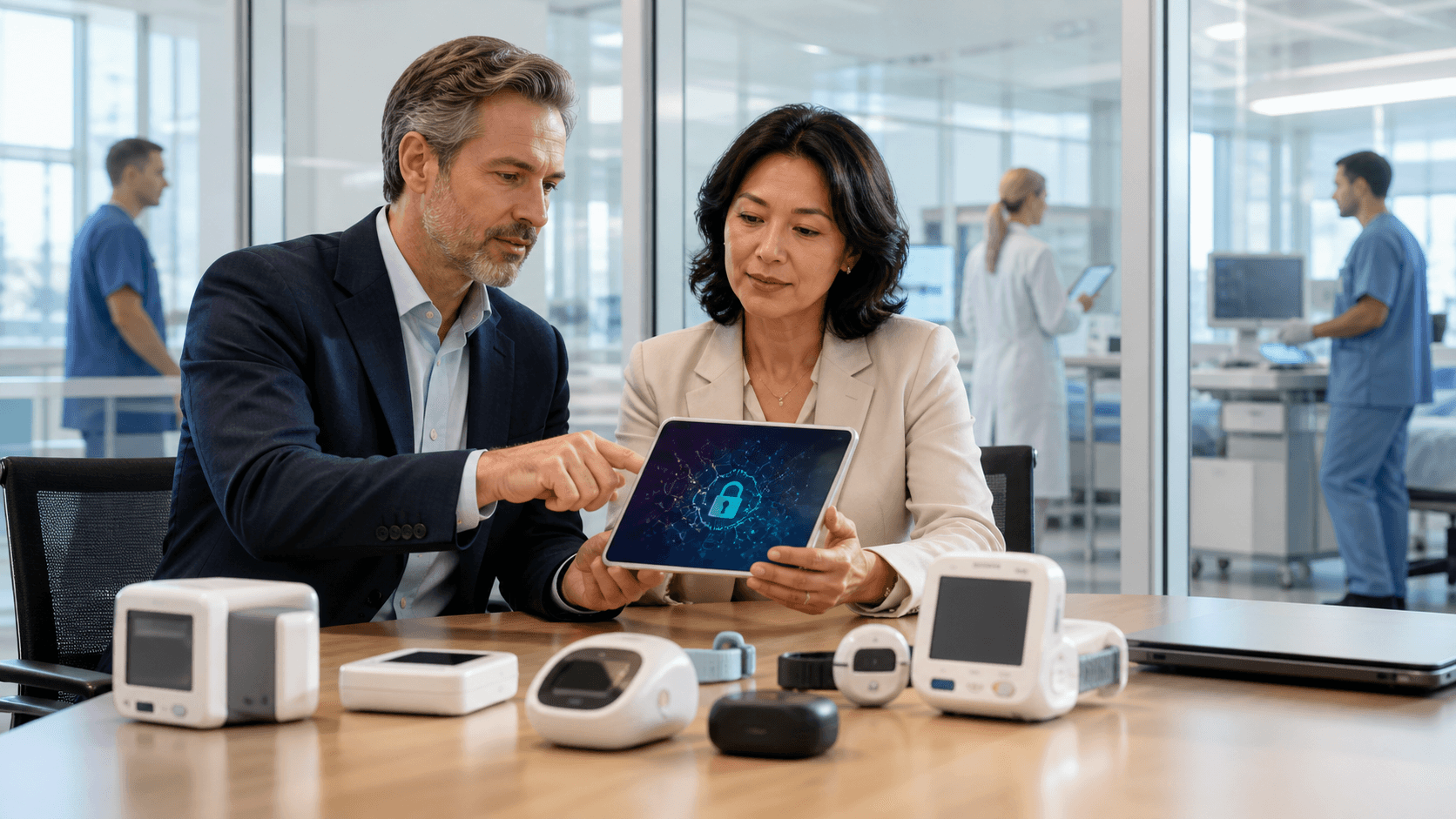
Healthcare leaders are carrying a lot into year-end. Ransomware groups are still going after hospitals and clinics. Regulators keep asking harder questions. Cyber insurance renewals are no longer a rubber stamp. Many teams feel tired, short-staffed, and under the microscope at the same time.
Virtual CISO services for healthcare sound like a relief. You get senior security leadership without adding another full-time executive. That can be smart, but fast or shallow choices can create gaps that show up during an incident, an OCR investigation, or an insurance review. We want to walk through the decision traps we see and how to steer around them so your vCISO actually reduces breach impact instead of becoming just another name on your vendor list.
When "Good Enough" Security Becomes a Career Risk
For many healthcare executives, security feels like a constant tradeoff. You are balancing:
* Patient safety and uptime
* Regulatory pressure
* Budget and staffing limits
* Cyber insurance demands
It can be tempting to aim for "good enough" so everyone can move on. The risk is that "good enough" is usually based on checklists, not on how attackers actually work or how your clinics and hospitals actually run.
Virtual CISO services for healthcare promise strategic guidance without adding a permanent seat in the C-suite. That part is not the problem. The danger comes when:
* You select a vCISO based only on a proposal and a resume
* You scope the engagement too narrowly, just to "get through year-end"
* You do not set clear expectations for how they work with your SOC, MDR, and IT teams
The real question is not "Should we outsource security leadership?" It is "How do we choose, scope, and govern this relationship so it protects our patients, our staff, and our own careers when things go wrong?"
The Illusion of Compliance as a Safety Net
One of the biggest traps is treating virtual CISO services for healthcare as a way to pass audits rather than manage risk every day. When that happens, you often see:
* Policies written for the binder, not for the bedside
* Risk registers that never change, even when the environment does
* Gaps between what procedures say and what people actually do
Regulations like HIPAA, HITRUST, and SOC 2 use careful language. Attackers do not. They look for weak EHR integrations, exposed medical IoT devices, and poorly managed third parties, especially those that handle billing or imaging. Passing an audit does not stop a business email compromise or a double-extortion ransomware attack.
So how do you separate real risk management from checkbox work? Ask your vCISO candidates questions like:
* How will you turn our regulatory requirements into a small set of measurable security goals?
* How will you tie those goals to patient safety, not just to paperwork?
* How will you reduce downtime if ransomware hits our EHR or key clinical systems?
* How will your work support smoother and faster cyber insurance reviews?
If the answers stay at the policy level, you are still standing on the illusion, not on a safety net.
Chasing Titles Instead of Measurable Outcomes
Another trap is picking a vCISO because the resume looks impressive. Former health system CISOs. A long list of certifications. Sharp slide decks. None of that guarantees results in your environment.
Outcome-focused virtual CISO services for healthcare should be judged on what changes, such as:
* Faster mean time to detect and respond to real incidents
* Fewer repeat high-risk findings in yearly assessments
* Better results in backup and recovery tests for clinical systems
* Stronger privileged access controls around EHR, imaging, and core infrastructure
A simple decision filter can help you stay grounded. Ask every vCISO candidate:
* How will you plug into our existing SOC, MDR, and IT teams on day one?
* How will your plan support our care delivery workflows, not slow them down?
* How will you align with our EMR downtime procedures and emergency operations plans?
* What do you review with executives after a major incident so we do not repeat it?
If they cannot give clear, practical answers in plain language, expect the relationship to stay at the PowerPoint level.
Underestimating the Complexity of Healthcare Risk
Healthcare is not like banking or retail. A generic vCISO model that works for other sectors often breaks when it meets hospitals, physician groups, and specialty clinics that never close and depend on aging clinical gear.
A healthcare-ready vCISO needs to be fluent in things like:
* Biomedical device security and what can and cannot be patched quickly
* Vendor risk tied to cloud EHRs, clearinghouses, and niche clinical apps
* Overlapping state privacy rules on top of HIPAA
* True 24/7 clinical operations that cannot afford long downtime or clumsy failovers
When virtual CISO services for healthcare are mature, the work looks different. You see:
* Joint planning with CMIOs, CNIOs, and operations leaders
* Ties into quality and patient safety committees, not just IT meetings
* Tabletop exercises that walk through ransomware hitting imaging, lab, or pharmacy systems
* Coordinated playbooks that involve cyber insurance teams and legal counsel from the start
If your vCISO treats your organization like a generic "mid-market business," you may be underestimating how messy and unique healthcare risk really is.
Overlooking Integration with 24/7 Security Operations
The last big trap is treating the vCISO like a monthly advisor on the side. They present slides once a month while your SOC, MDR provider, or internal IT team fights real-time threats at 3 a.m. in the middle of winter when patient volume is high and staff are stretched.
Heading into peak attack seasons, you need tight integration between:
* Governance and strategy (vCISO)
* Monitoring and response (SOC and MDR)
* Compliance operations
* Clinical and business leadership
Key integration questions to settle early include:
* When a critical alert fires, who gets notified and how fast does it reach leadership?
* How do lessons from each incident feed back into policy, training, and technical controls?
* How will the vCISO coordinate across multiple facilities, cloud environments, and major vendors during a crisis?
* How are all of these activities documented so they stand up during audits and insurance reviews?
When this is done well, everyone works from the same playbooks, under a single, clear set of expectations, not a tangle of different contracts.
Turning Virtual CISO Decisions Into Strategic Advantage
When these decision traps stack up, they create a false sense of security. Audits feel fine until the next breach hits. Regulatory questions get harder. Breach impact grows, and reputation damage lingers long after systems come back online.
Before finalizing year-end budgets, healthcare leaders can reset by using a short checklist for virtual CISO services for healthcare:
* Core capabilities: risk management, regulatory alignment, incident response planning, board reporting
* Integration requirements: clear links with SOC, MDR, IT, clinical leaders, and compliance teams under one SLA where possible
* Outcome metrics to review quarterly: detection and response times, assessment findings, backup recoverability, access control improvements, and real incident lessons learned
From our seat at EFROS, working with regulated mid-market organizations across healthcare and other sectors, we see one pattern hold true. Treating the vCISO choice as a patient safety and business resilience decision, not just a staffing fix, changes the questions you ask and the results you expect. When that role is tied closely to 24/7 SOC, MDR, and governance under a single, auditable SLA, security leadership stops being a box to check and becomes a steady, reliable part of how your organization protects people and keeps care moving.
Protect Patient Data With Proven Virtual CISO Expertise
If you are ready to close security gaps and keep pace with evolving HIPAA and SOC requirements, our virtual CISO services for healthcare can provide the strategic guidance you need. At EFROS, we work closely with your team to align security controls with real-world clinical workflows, not just checklists. Tell us about your environment and challenges so we can outline practical next steps tailored to your organization, or contact us to schedule a conversation with our experts.