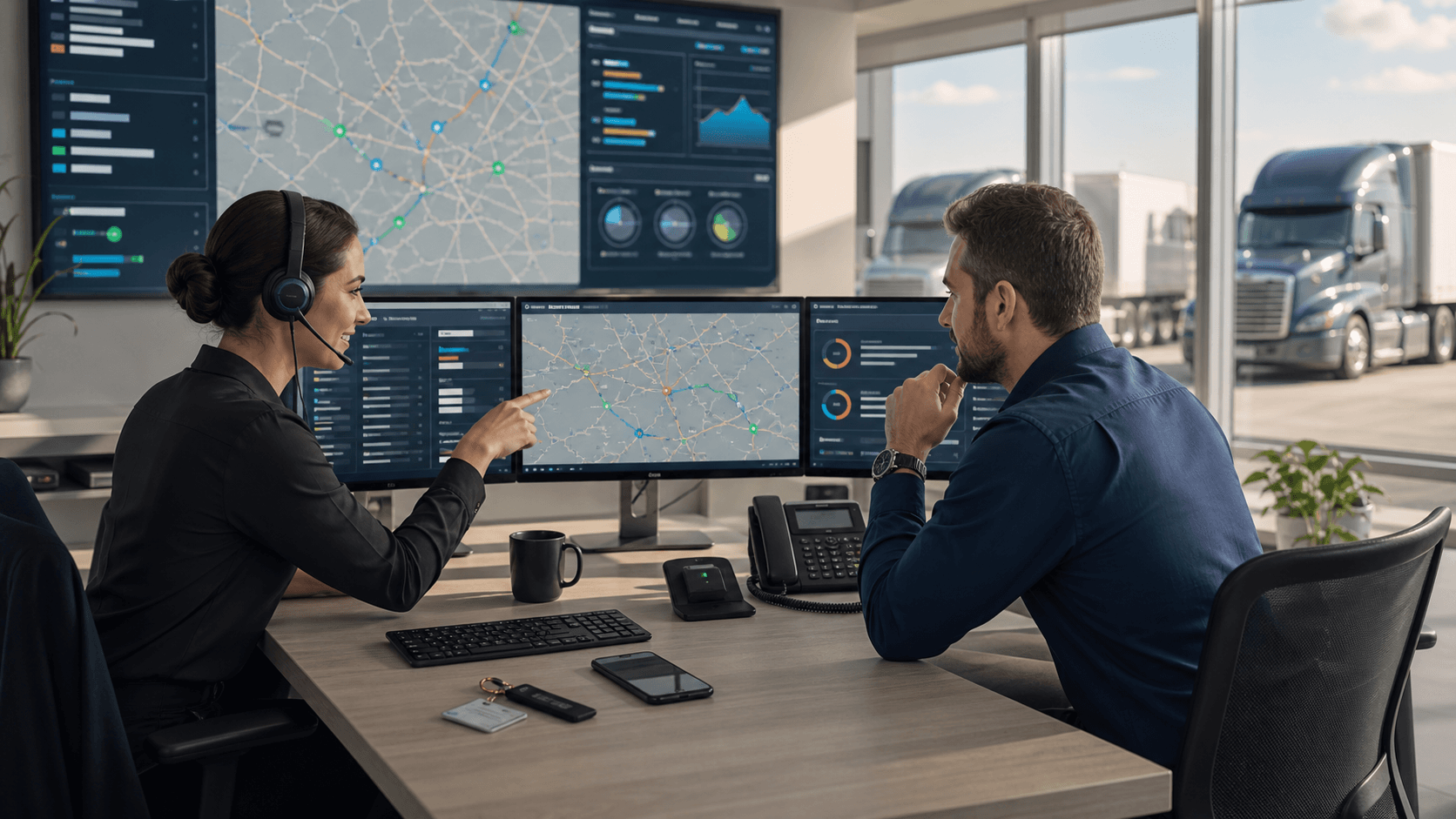
Turn Cyber Risk Into On-Time Deliveries
Cybersecurity for trucking companies has to earn its place on the dispatch floor. If it does not help freight move, dispatch will see it as one more thing getting in the way. When screens freeze during a surge in the freight, nobody cares what malware did it, they care that loads are now late.
Think about peak fall season. Freight is stacked up before the holidays, storms are rolling across the country, and customers are pushing hard for end-of-year shipments. Dispatch is trying to reroute trucks around bad weather and tight delivery windows, then suddenly the TMS locks up or GPS locations stop updating. Those few minutes of lost visibility quickly turn into missed time slots, detention fees, and unhappy shippers.
This is why we see cybersecurity as an operations tool, not just an IT expense. When systems are protected and stable, ETAs stay accurate, ELDs stay online, and dispatch, drivers, and customers stay in sync. When dispatch sees cybersecurity actively keeping visibility, ELD uptime, and routing tools on track, they stop fighting it and start asking for more of it. Our job at EFROS is to make that shift real, every single day.
What Dispatch Actually Cares About When Systems Go Down
Dispatch thinks in loads, drivers, and minutes, not in malware, firewalls, and phishing emails. When something breaks, they care about:
- Can we still see where every truck is?
- Which drivers are free and which are out of hours?
- Can we change routes fast if a storm or wreck hits?
- What do we tell the customer right now?
Cyber incidents hit those questions hard. Common failures that hit dispatch first include:
- Locked or frozen TMS that stops load planning and updates
- Load boards that will not load or post new freight
- ELD or telematics outages that hide hours of service and locations
- Driver mobile apps that stop sending check calls or proof of delivery
Every one of these problems means more phone calls, more guesswork, and more stress. During heavy months like September through December, even a small outage can feel like chaos.
To earn dispatch buy-in, cybersecurity cannot just say, "We keep you safe." It has to show that it will:
- Cut down surprise outages
- Speed up decisions when things break
- Avoid extra steps, slow prompts, or login problems when freight is hot
If security adds friction right when freight is on fire, dispatch will route around it like a bad road.
How Cybersecurity for Trucking Companies Protects Load Visibility
For trucking operations, visibility is the lifeline. Cybersecurity for trucking companies has to wrap around the tools dispatch actually touches all day, like:
- TMS and dispatch software
- ELD platforms
- GPS and telematics systems
- Messaging tools between dispatch and drivers
- Digital freight and broker platforms
Each of these can be hit by ransomware, account takeover, or other attacks. A single stolen login can post fake loads or reroute freight. A locked database can hide where half your trucks are. Those are not abstract problems, those are late deliveries.
This is where 24/7 monitoring and a managed SOC make a real difference. Instead of someone noticing, "Huh, this looks odd," and waiting hours for IT, a SOC is watching in real time. When something looks wrong, the steps from alert to action are tight:
- Spot the strange behavior or login
- Isolate the system or account
- Block the attacker and stop the spread
- Work to get dispatch tools back online fast
The goal is simple: keep real-time truck locations, ETAs, and status updates flowing. During fall peak, when the weather shifts every few hours and docks are packed, even a small delay in location data can throw off an entire day. Security that keeps those feeds accurate and steady is security dispatch will back.
Proving Security Will Not Slow Dispatch Down
Many dispatch teams have the same fear: security will slow them down. They picture:
- More passwords to remember
- More screens and prompts
- More accounts locked right when they need to cover a rush load
That fear is real, and if we ignore it, no one on the dispatch side will support new tools.
Good security should feel like good operations. Things like single sign-on can let dispatch log in once and move across tools without juggling passwords. Secure mobile access can let after-hours or remote dispatchers jump in from home during a storm or outage without strange workarounds.
We can also set up clear, agreed rules for those "everything is on fire" moments. At EFROS, we like to define what we call emergency lanes with clients. These are:
- Pre-approved ways to bypass certain non-critical controls in true emergencies
- Written rules about who can approve those moves
- Automatic logging of what happened for later review and compliance
That way, freight keeps moving when it has to, but the business still keeps records and guardrails in place. Security is present, but it is not grabbing the wheel out of dispatch's hands.
Building Trust with Playbooks, Not Panic
Trust between dispatch and security is not built during a crisis; it is built before it. Clear incident response playbooks are a big part of that.
For trucking teams, those playbooks must be written in dispatch language. They should answer questions like:
- Who does dispatch call first if the TMS locks up?
- What exact message do we give drivers if the mobile app goes down?
- Which systems do we try to restore first: TMS, ELD, phones, or load boards?
- How often do we update customers while things are down?
During an event, there should be no surprises. Dispatch should get simple, steady updates: what is broken, what is working, what the plan is, and when the next update will come. After things calm down, dispatch should be part of the review, not just hear that "IT fixed it." The conversation should cover how the outage hit on-time performance, driver hours, and customer service, not only what exploit was used.
One of the best ways to prepare is to run tabletop exercises before peak season hits hard. A short, focused walk-through of a fake outage lets dispatch test the plan, ask questions, and point out gaps. That way, if a real attack hits on a late Friday, people are not guessing. They are following a script they helped write.
Turn Dispatch Into Your Strongest Cyber Ally
If you want cybersecurity for trucking companies to work, dispatch cannot be an afterthought. Dispatch should help shape the plan from the start, especially before fall freight ramps up. That means sitting down together to define:
- Which systems are truly mission critical
- How long each system can be down before loads are at real risk
- What "good communication" looks like during an incident
- Which metrics matter most, like on-time percentage or missed appointments
From there, leaders can map where a cyber incident would hit dispatch the hardest and where protections need to be tighter. Security metrics should line up with operations metrics, so winning in security also looks like winning in on-time performance and less dwell time.
It also helps to confirm that your security partner understands transportation, not just general IT. A team like EFROS, based in the United States and focused on regulated and high-risk industries, is built to cover 24/7 SOC, incident response, compliance readiness, and AI governance under one SLA. Our goal is to speak both security and dispatch, so your trucks keep rolling on schedule, even when attackers try to knock your network off the road.
Protect Your Fleet With Proven Cybersecurity Expertise
Stronger email and data protection start with the right strategy, and at EFROS we tailor security controls to how your fleet actually operates. Explore how our cybersecurity for trucking companies approach helps safeguard freight brokers, dispatchers, and drivers from costly breaches. If you are ready to reduce risk and close your most critical security gaps, contact us today to talk through practical next steps.